
Siamo arrivati sull’isola del Kalimantan (il Borneo indonesiano) circa una settimana fa senza grandi aspettative, sapevamo che visitare questa isola poteva risultare estremamente costoso, tortuoso e pericoloso.
Il nostro zainetto era già prediposto per visitare la terza isola più grande al mondo, paragonabile solo alla foresta amazzonica sia in termini di aree verdi che di problemi ambientali legati all’incontrollato disboscamento e di sfruttamento delle sue risorse naturali.
Dopo essere stati ospiti di simpatici couchsurfer nelle città di Balikpapan e di Samarinda (est del Kalimantan) abbiamo deciso di risalire il fiume Mahakam (lungo 930km) navigandolo per circa 400 km. Dopo 17 ore di navigazione il kapar biasa (barca a due piani) si è dovuto fermare nella cittadina di Melak, il fiume non è più percorribile dovuto alla stagione secca. Nei pressi di Melak ci ha accolto Ipoel, un attivista del WWF. Abbiamo deciso di fermarci per un po’ di giorni presso la struttura di una delle più famose organizzazioni ambientaliste del mondo e della storia.
Abbiamo trovato un’atmosfera a dir poco surreale sotto diversi punti di vista. Una perenne cappa di fumo ricopre il cielo sopra di noi, alzando il livello di umidità e rendendo la respirazione difficile. La maggior parte delle persone con cui ci siamo soffermati a parlare ci ripetono continuamente la parola “fog”, lamentando che l’assenza di pioggie da quasi 4 mesi rende insopportabile la nuvole di fumo che provengono dal Kalimantan centrale e occidentale. Gli ultimi dati divulgati dalla CNN ci informano che sono circa 1,5 milioni di studenti (in Indonesia e nelle vicine Singapore e Malesia) a esserne colpiti.
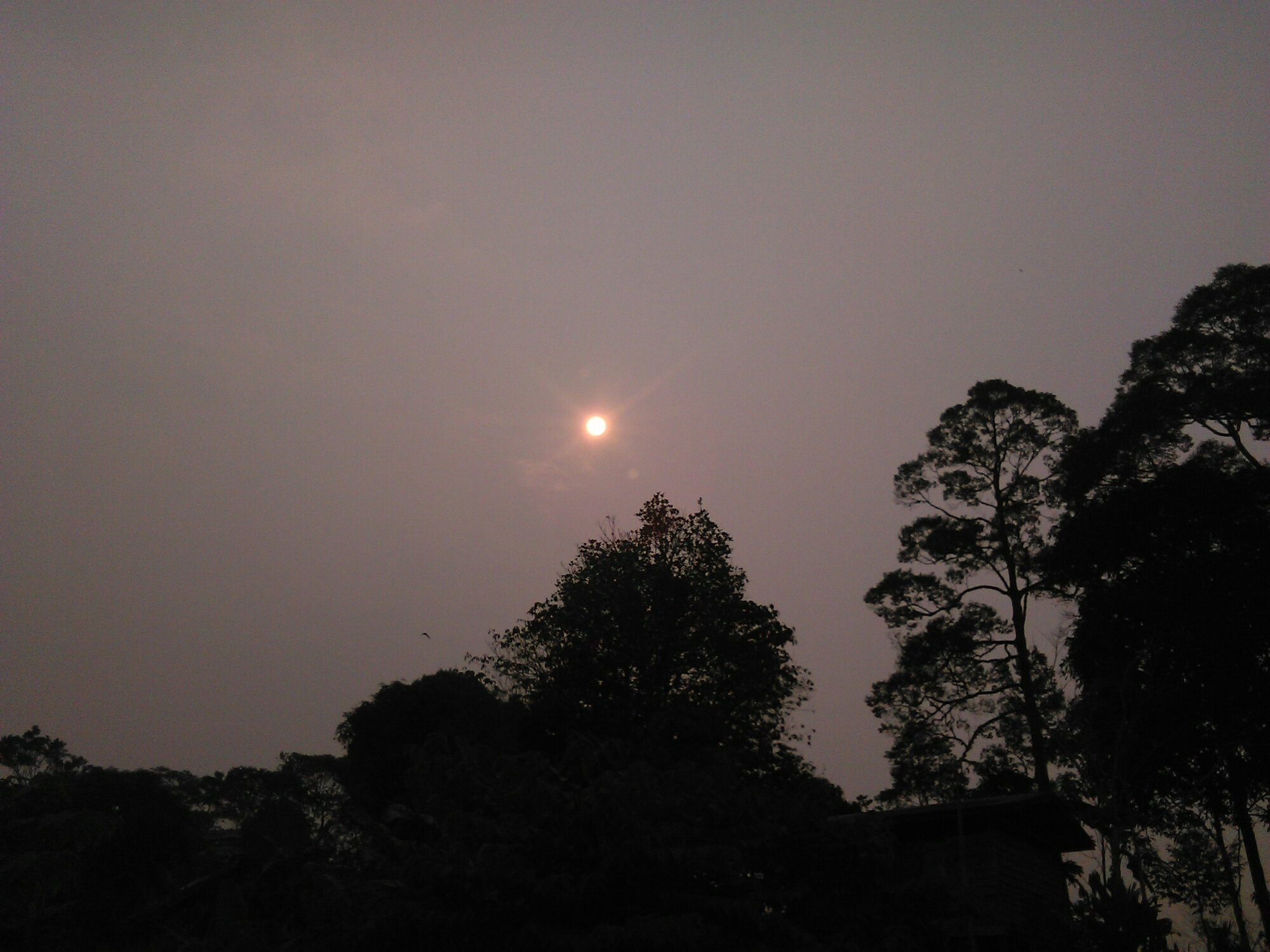

 Gli incendi nella foresta sono causati per far spazio alle piantagioni di olio di palma, che aumentano giornalmente nell Kalimantan. La monocultura di questa palma garantisce un alto profitto a breve termine ma rende il terreno arido e non più praticabile dopo circa 30 anni, provocando l’estinzione di molte specie animali, l’inquinamento delle falde acquifere derivati dai fertilizzanti usati. Il WWF dell’Est Kalimantan ci è sembrato inerme di fronte alla forza invisibile delle lobby che stanno dietro questa delicata e complessa problematica. La loro missione principale è quella di educare la popolazione locale a valorizzare il loro territorio in modo sostenibile.
A tal proposito, abbiamo accompagnato Ipoel a una scuola elementare del posto. Abbiamo introdotto ai bambini e agli insegnati il progetto di green-books.org e discusso del problema delle nuovole di fumo che sovrastano il cielo. A nostra grande sorpresa, i bambini sapevano perfettamente il motivo, così gli abbiamo chiesto di disegnarci “una giornata di sole giocando nel mio villaggio”.
Siamo contenti di sapere che la scuola riceverà a breve i libri sulla natura e sull’ambiente donati da green-books.org
We arrived in Kalimantan (the indonesian part of Borneo) almost a week ago, knowing that visiting this island would be expensive, difficult and potentially dangerous.
Borneo is the world’s third biggest island, and can be compared to the Amazon rainforest for its green surface and for the problems derived from illegal logging and exploitaition of its natural resources.
After spending a few days in Balikpapan and Samarinda hosted by super nice couchsurfers, we decided to navigate the Mahakam river (930km long). The kapar biasa (local boat with upper deck) stopped in Melak after 17 hours of sailing, the river is too dry to proceed further. Here we met our fiend Ipoel, who works for the WWF office of East Kalimantan. Ipoel welcomed us and convinced us to stop here for few nights.
The haze of smog coming from the nearby rainforest burning and the consequent permanent grey sky make it for a surreal, hot and humid atmosphere. Talking with the locals, we learned that the “haze” (or “fog”, as they call it) coming from Central and West Kalimantan is now starting to be unbearable after 4 months of no rain. According to the last updates by CNN, the thick haze affect 1.5 million students in Indonesia and nearby Singapore and Malaysia.
The fires in the rainforest are started from the transnational companies that favor palm oil monoculture, destroying the biodiversity of the rainforest and contaminating the waters with fertilizers. Palm oil plantations grow everyday, securing short term profits but making the soil dry and unproductive after 30 years. The WWF of East Kalimantan focuses on educating the local population to protect and value their resources in a sustainable way, but is defenceless in front of the powerful lobbies that lie behind this huge and delicate problem.
In this regards, we visited a local elementary school with Ipoel. We introduced the project of green-books.org to the headmaster and the students, and talked about the issue of the haze. To our surprise, the students were aware of the causes of the smoke, so we asked them to make a drawing of “one sunny day playing in my village”:
We are happy that the school will soon receive the eco-library books donated by green-books.org !
 Zainetto in spalla